Badia di San Vittore, Via Cicerone, 7 62011 Cingoli (MC)
cnzbarresi@gmail.com | Tel 334 1979306



History of the Badia
ABBEY OF SAN VITTORE DI CINGOLI
History of the Badia
ABBEY OF SAN VITTORE DI CINGOLI
Set in a valley shaped by the rushing waters of the Musone River, the village of San Vittore di Cingoli is home to a historic Benedictine abbey dating from the 11th century.




An Ancient History
The Abbey of San Vittore
Adjacent to the Benedictine Abbey of San Vittore di Cingoli, now known as Villa Della Rovere, on the left bank of the Musone River, there once stood an ancient sanctuary dedicated to the worship of water. The spring was regarded as sacred and renowned for its healing properties. During the Roman period, a thermal bathing complex was established on the site, further attesting to the area’s longstanding connection with water and wellness.
The spring, known as the “Fonte del Bagno” (“Bath Spring”) or “Fonte di San Giovanni” (“Saint John’s Spring”), remained an important gathering place for the local community until recent decades. Each year, on the night of “San Giovanni” (24 June), residents would visit the spring to perform traditional rituals centered on water, reflecting centuries-old beliefs in its purifying and beneficial powers.
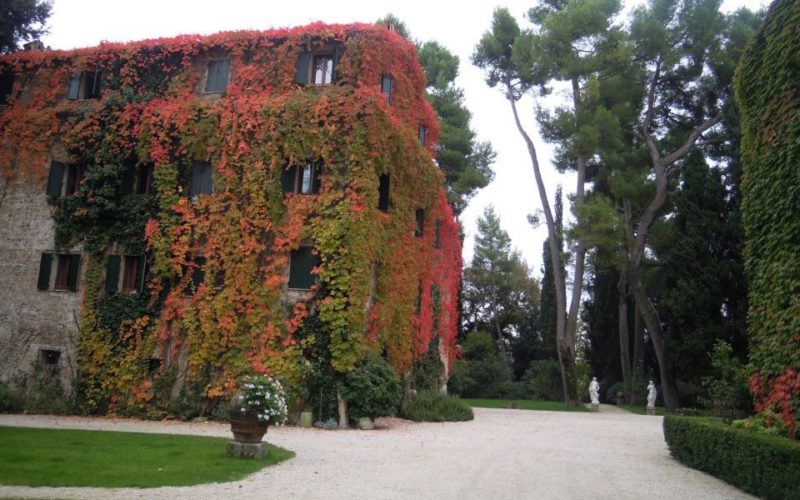
Adjacent to the Benedictine Abbey of San Vittore di Cingoli, now known as Villa Della Rovere, on the left bank of the Musone River, there once stood an ancient sanctuary dedicated to the worship of water. The spring was regarded as sacred and renowned for its healing properties. During the Roman period, a thermal bathing complex was established on the site, further attesting to the area’s longstanding connection with water and wellness.
The spring, known as the “Fonte del Bagno” (“Bath Spring”) or “Fonte di San Giovanni” (“Saint John’s Spring”), remained an important gathering place for the local community until recent decades. Each year, on the night of “San Giovanni” (24 June), residents would visit the spring to perform traditional rituals centered on water, reflecting centuries-old beliefs in its purifying and beneficial powers.

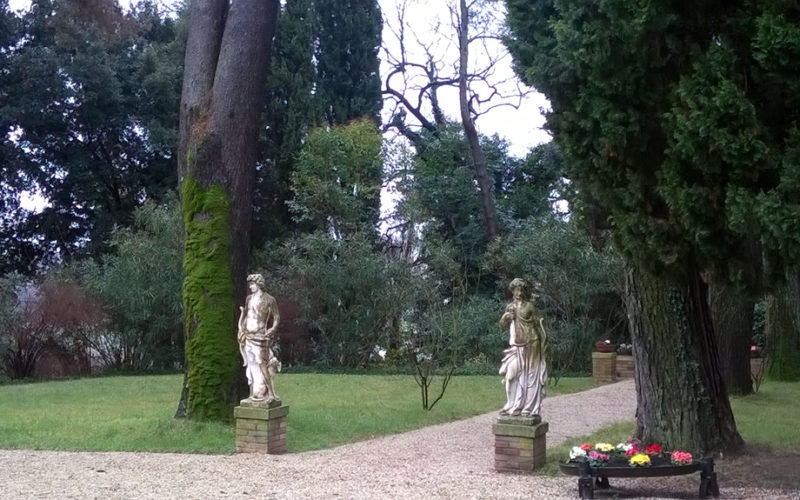
Around the ancient sanctuary, an urban settlement gradually developed into a thriving centre. The Romans later elevated it to the status of a municipality, which can most likely be identified with the municipium of Planina mentioned by Pliny the Elder.
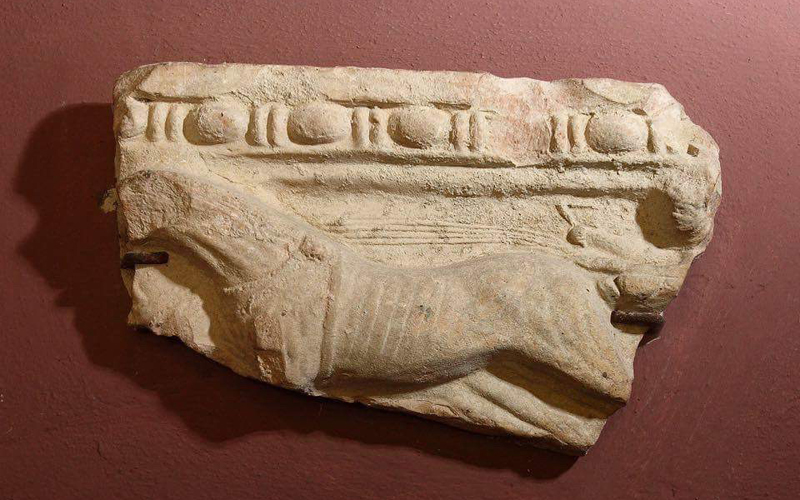
This identification is supported by both historical and archaeological evidence recovered at the site since the nineteenth century. Part of this material is displayed in one of the rooms of the villa, which has been appropriately converted into an antiquarium—a space dedicated to the preservation and exhibition of antiquities.
Among the finds are Republican-era inscriptions, including a sacred law recording the location of the spring, ceramic fragments, Roman architectural remains, and pieces of Roman sculptures. Additional discoveries, now housed in museums in Cingoli, Jesi, Ancona, and Florence, have enabled researchers to reconstruct the history of the site from as early as the pre-Roman period.
Around the ancient sanctuary, little by little an urban reality grew, a true centre which the Romans elevated to a municipality which with great probability we can recognize in the municipality called Planina cited by Plinto il Vecchio.
It is possible to confirm this on the basis of historical and archeological documentation which has been recovered since the 1800’s at this site and which in part can be viewed in one of the rooms of the Villa, correctly used as an`antiquarium’ – a place to keep antiques.
This deals with inscriptions of the republican period (in particular a sacred law which aims to record the location of the Spring), ceramic fragments, Roman architectural structures and fragments of sculptures of the Roman era; scientists also have been able to reconstruct the site beginning already with the pre-Roman period from other findings which are presently kept in museums at Cingoli, Jesi, Ancona and Florence.
The sanctuary located near the Abbey of San Vittore remained an important place of worship and visitation until the end of the 5th century BC.
Excavations carried out between 1845 and 1846 uncovered a series of structures, some featuring terracotta-tiled floors and others decorated with black-and-white mosaic pavements. Additional rooms contained mosaics depicting aquatic animals, as well as bathing facilities adorned with tiles and connected by channels and water pipes. These remains testify to the continuous use and development of the complex from the 5th and 4th centuries BC through to the end of the 1st century BC.
Further discoveries in the San Vittore area include six cremation burials dating to the 1st century BC and residential buildings with mosaic floors from the 2nd century BC, providing valuable insight into the settlement that grew around the sanctuary.
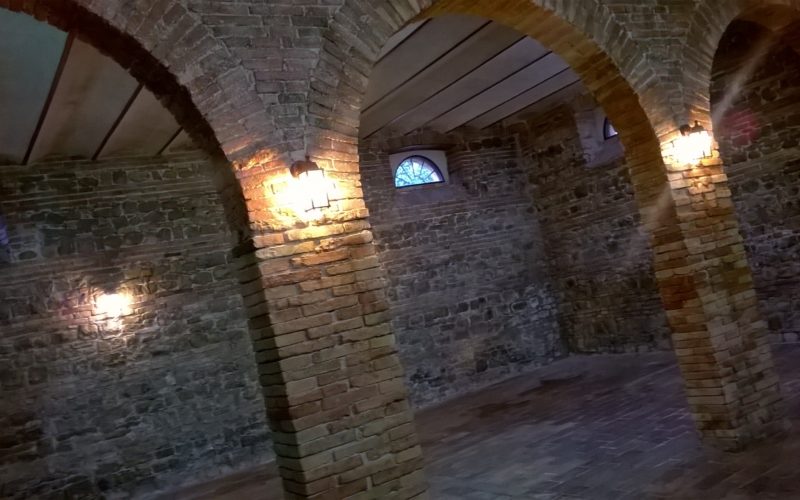
The sanctuary located near the Abbey of San Vittore remained an important place of worship and visitation until the end of the 5th century BC.
Excavations carried out between 1845 and 1846 uncovered a series of structures, some featuring terracotta-tiled floors and others decorated with black-and-white mosaic pavements. Additional rooms contained mosaics depicting aquatic animals, as well as bathing facilities adorned with tiles and connected by channels and water pipes. These remains testify to the continuous use and development of the complex from the 5th and 4th centuries BC through to the end of the 1st century BC.
Further discoveries in the San Vittore area include six cremation burials dating to the 1st century BC and residential buildings with mosaic floors from the 2nd century BC, providing valuable insight into the settlement that grew around the sanctuary.
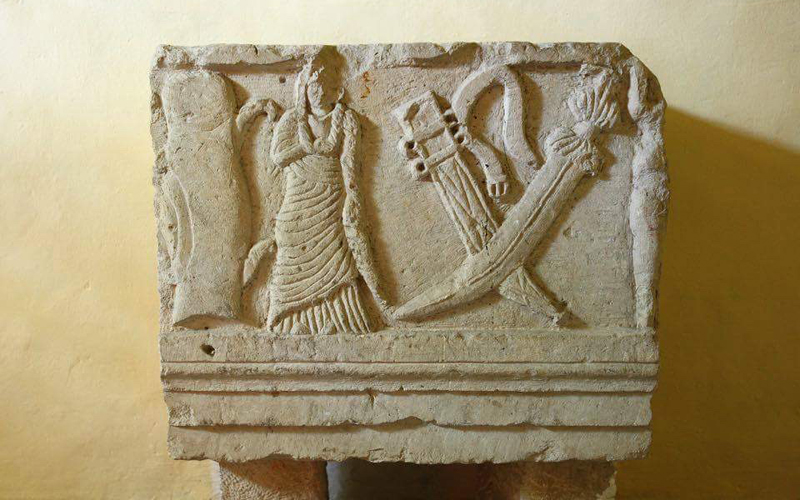
As was often the case in the ancient world, it is likely that the deity venerated at the sanctuary of San Vittore was female. This hypothesis is supported by several terracotta fragments that appear to depict a goddess and can be dated to the 5th–4th centuries BC.
Only one of these fragments has survived. It depicts the upper portion of a female deity’s face and is currently preserved in the Archaeological Museum of Cingoli. The fragment was discovered in the vicinity of the abbey.
Another particularly significant find is a statue representing a woman, although the head and lower limbs are missing. The figure is dressed in a tunic and draped in a light mantle that completely covers the upper body, including the arms. This sculpture has been dated to the 3rd century BC and provides further evidence of the religious significance of the site.
As was often the case in the ancient world, it is likely that the deity venerated at the sanctuary of San Vittore was female. This hypothesis is supported by several terracotta fragments that appear to depict a goddess and can be dated to the 5th–4th centuries BC.
Only one of these fragments has survived. It depicts the upper portion of a female deity’s face and is currently preserved in the Archaeological Museum of Cingoli. The fragment was discovered in the vicinity of the abbey.
Another particularly significant find is a statue representing a woman, although the head and lower limbs are missing. The figure is dressed in a tunic and draped in a light mantle that completely covers the upper body, including the arms. This sculpture has been dated to the 3rd century BC and provides further evidence of the religious significance of the site.
To further identify the nature of this place of worship, several anatomical votive offerings preserved in the Archaeological Museum of Cingoli are of great significance. These include a votive model of a stomach and a small terracotta female figurine, which testify to the well-known practice of devotees offering to the deity either a representation of the afflicted body part or an image of the entire person seeking healing. Such offerings could be made either when requesting divine intervention or later, in gratitude for a recovery that had already taken place.
Sanctuaries of this kind commonly yield small terracotta representations of hands, feet, breasts, uteri, intestines, phalluses, and other body parts for which healing was sought. It is likely that similar practices took place at San Vittore as well, although no large quantities of such votive material have been discovered there, unlike at other well-known sacred sites of ancient Italy.
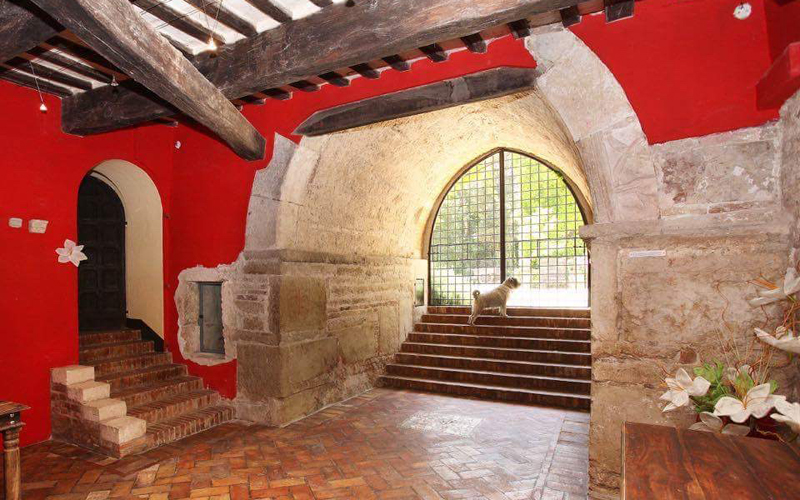
In the area of the hamlet of San Vittore, near Cingoli, no archaeological structures are currently visible that attest to the existence of the thermal and sanctuary complex associated with the Fonte del Bagno (Bath Spring). Nevertheless, it is particularly noteworthy that the site experienced an exceptionally long period of occupation and use, spanning at least three distinct phases.
The earliest phase (5th–4th centuries BC) was Italic in character and displayed significant influences from the Greek colonies of southern Italy (Magna Graecia), possibly linked to the presence of the Syracusans of Ancona and the Senone Gauls. This was followed by a second phase (3rd–2nd centuries BC), characterized by Etruscan-Latial-Campanian cultural elements and connected to the Romanization of Picenum and the Ager Gallicus.
The third and final phase belongs to the Roman period, during which a municipium most likely developed around the sanctuary complex. The names of its magistrates (duoviri) are known from inscriptions preserved at Villa Della Rovere, which explicitly record structural works carried out on a public building, namely the basilica.
In the area of the hamlet of San Vittore, near Cingoli, no archaeological structures are currently visible that attest to the existence of the thermal and sanctuary complex associated with the Fonte del Bagno (Bath Spring). Nevertheless, it is particularly noteworthy that the site experienced an exceptionally long period of occupation and use, spanning at least three distinct phases.
The earliest phase (5th–4th centuries BC) was Italic in character and displayed significant influences from the Greek colonies of southern Italy (Magna Graecia), possibly linked to the presence of the Syracusans of Ancona and the Senone Gauls. This was followed by a second phase (3rd–2nd centuries BC), characterized by Etruscan-Latial-Campanian cultural elements and connected to the Romanization of Picenum and the Ager Gallicus.
The third and final phase belongs to the Roman period, during which a municipium most likely developed around the sanctuary complex. The names of its magistrates (duoviri) are known from inscriptions preserved at Villa Della Rovere, which explicitly record structural works carried out on a public building, namely the basilica.
After the fall of the Roman Empire, this zone as others in the same territory suffered the consequences of abandonment until the medieval diffusion of monastery orders when the Benedictine monks arrived and founded the Abbey of San Vittore (10th century AC); they gave a new impulse to the cultivation of agricultural lands, the care of the surrounding territory and the memory of the past.
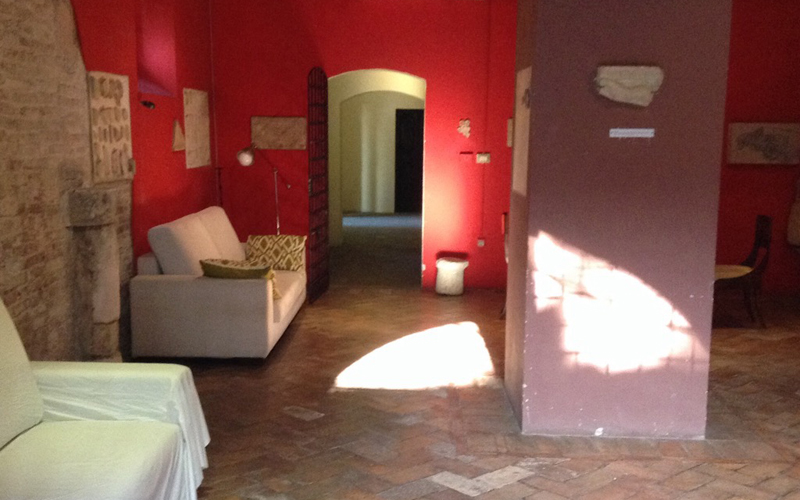
After the fall of the Roman Empire, this zone as others in the same territory suffered the consequences of abandonment until the medieval diffusion of monastery orders when the Benedictine monks arrived and founded the Abbey of San Vittore (10th century AC); they gave a new impulse to the cultivation of agricultural lands, the care of the surrounding territory and the memory of the past.